13 February 2011

Chapter 49:"Blast and Avalanche at Mother Lode," Pt 1


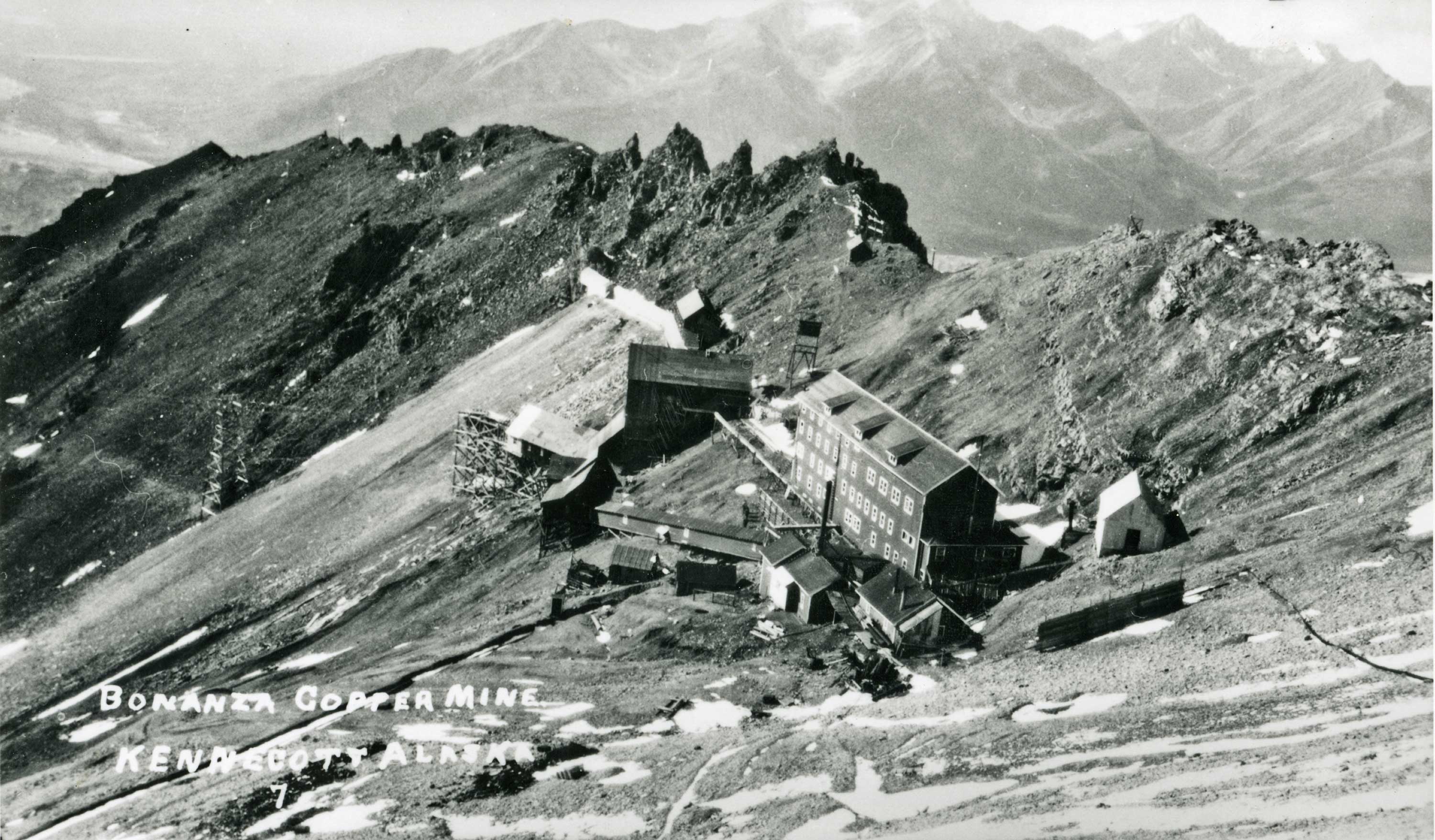
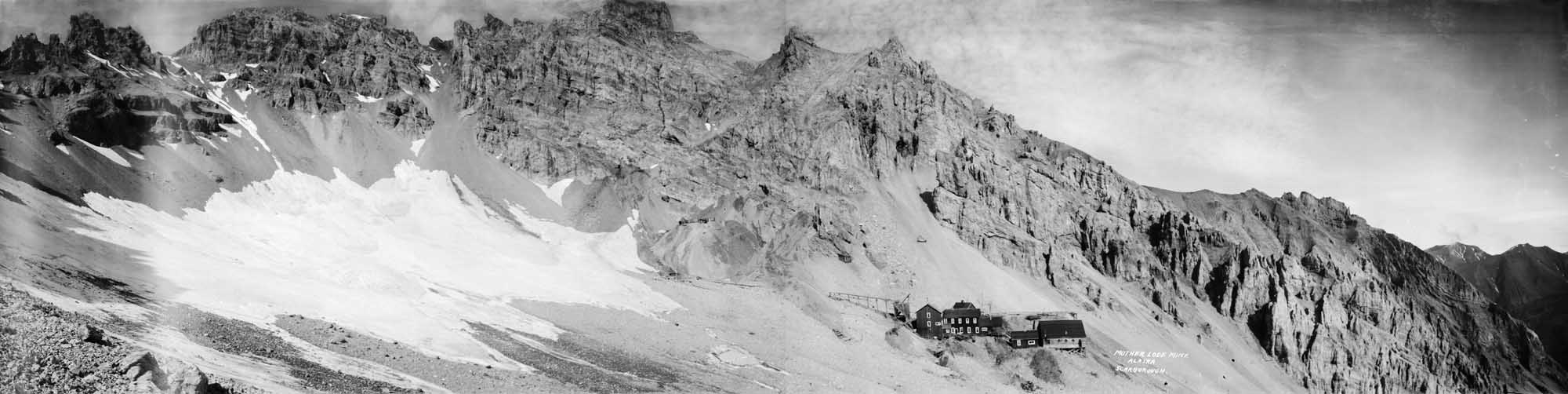
ML landscape
The Marvelous Gulch
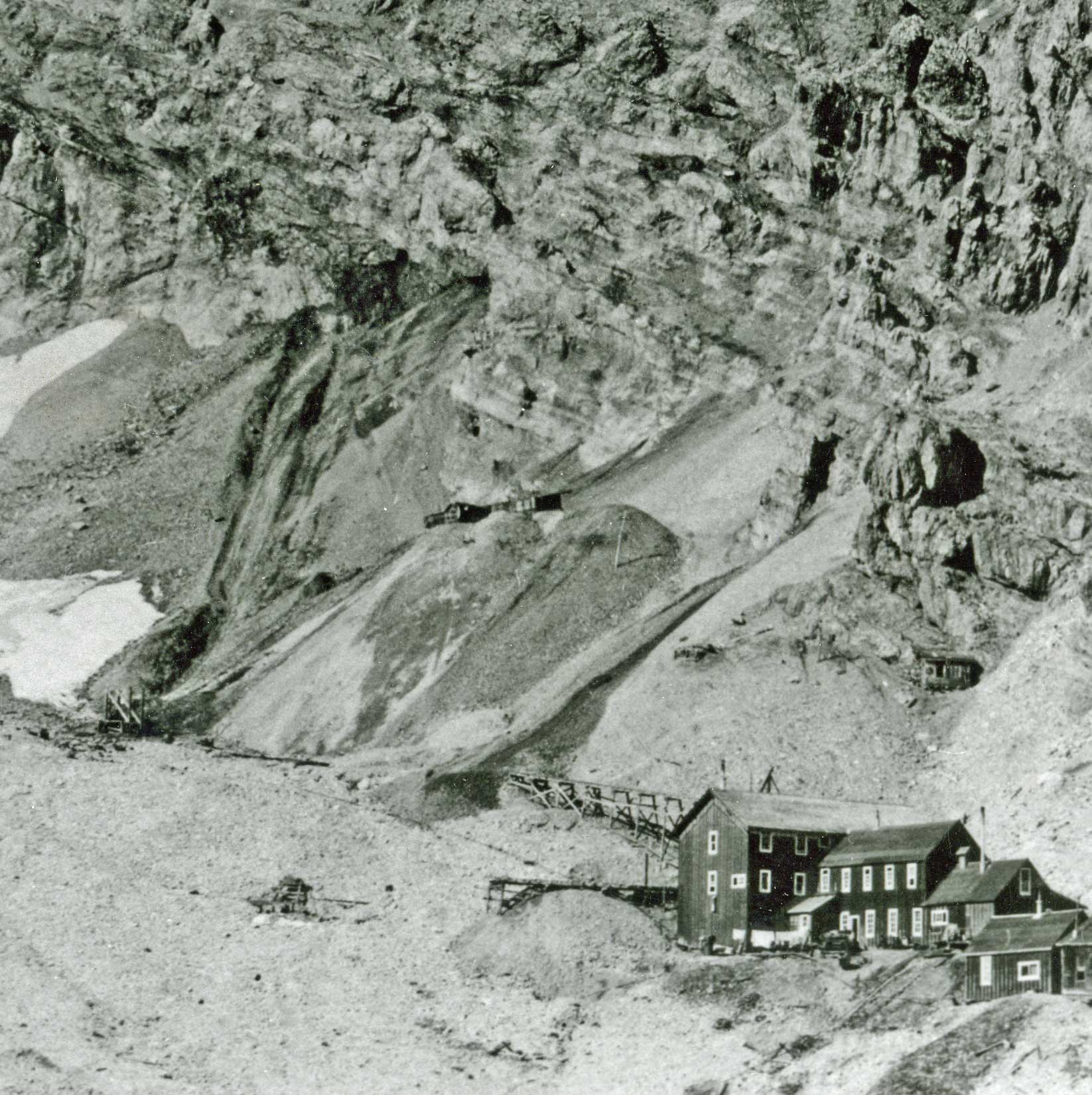
landscape, including the upper Mother Lode camp at an elevation of 5,200
feet, a Scarborough panorama.   --UAF Alaska & Polar Regions Archives    
           
             “Are the men about set to go?"

          “Everyone’s ready, Eldon.  I’ll take some men and go back through the boiler area and see about clearing a path over to the adit snow shed.  I wonder why they never extended the snow shed right to the camp?  It sure would have saved some problems,”  He said to no one in particular.

          Eldon walked back to one of the west-facing windows and glanced up.  If he recalled, the top of the bluff was at about the same altitude as the Bonanza adit.  It was out of sight.  He was quite sure that there were 200 to 300 feet of steep talus slide between the camp and the cliff wall.  That in itself was quite a substantial slide area.  It was heavy with snow just waiting for a trigger to begin an avalanche.

          At the base, between the north wall and the edge of the slide, the snow was accumulating in drifts. They were working their way up the steep hill from the direction of the creek, a long way below.   As the snow worked its way up the long slide which is Mother Lode Gulch,  it reached a large drop off which interrupted the otherwise uniform flow of the slide zone.  At this cliff-face,  the winds would hit the vertical wall and rush straight up, thrusting snow high into the air just below the camp, causing a wild and awesome effect, not to mention a very frightening one.   Above the rocky drop-off, the drifts began forming, turning amazingly large as they approached the tram terminal end of the camp.

          Eldon could determine no clearly discernable wind direction.  The winds appeared to come from all directions.  The slide zone immediately south of the camp, which was a natural deep trough running parallel to the buildings, had such a build-up of snow in it,  that it had become nearly even with the camp itself.  This placed the camp inside widened avalanche zone.  Any large amount of snow rushing from the west cirque wall would likely widen out to envelop the camp itself.  From the mess hall the advancing drifts could be seen working their way past the barrack toward the cirque at the top end of the gulch.  Mother Lode Gulch ended at a sheer cliff wall.  This was by far the most snow anyone could remember seeing in the area. Furthermore, the storm was showing no signs of abating.

          Scott brought in his shoveling crew. The entire crew was assembled in the mess hall enjoying a hearty midnight breakfast.  Once the men finished, they would head for the tram terminal warehouse to dress in the heavy outer wear needed for mining work.

          Mother Lode had no special drying room as was the case at Bonanza, but the  loading dock in the  tram terminal on the downhill end was steam heated and worked well as a staging area to assemble because it was the best place to dry the miners’ clothing.   

          The tram station platform doors were blocked shut to keep the cold and snow out.  Except for the special fuel run up the old McCarthy Creek road to start up the camp,  the motorized aerial tram to the old camp at the base of McCarthy Creek had not been used.  Once the fuel haul was completed, the men boarded the open tram area shut.   Inside the tram warehouse sat many barrels of bunker oil and sacks of coal that had all been hauled up in the dead of winter to be used to feed the boiler and stoves.  It was next to the bunker oil that the men hung their gear to dry.  They routinely returned from the mine wet and dirty.  It made for a very uncomfortable mess.  The showers had become essential. The engineers arranged for a water line to be run through the 800-level.  It ran from a pump submerged in a reservoir deep within the mine. The presence of running water, especially hot water coming from the boiler, was one of the small engineering miracles that made life bearable at the Mother Lode.
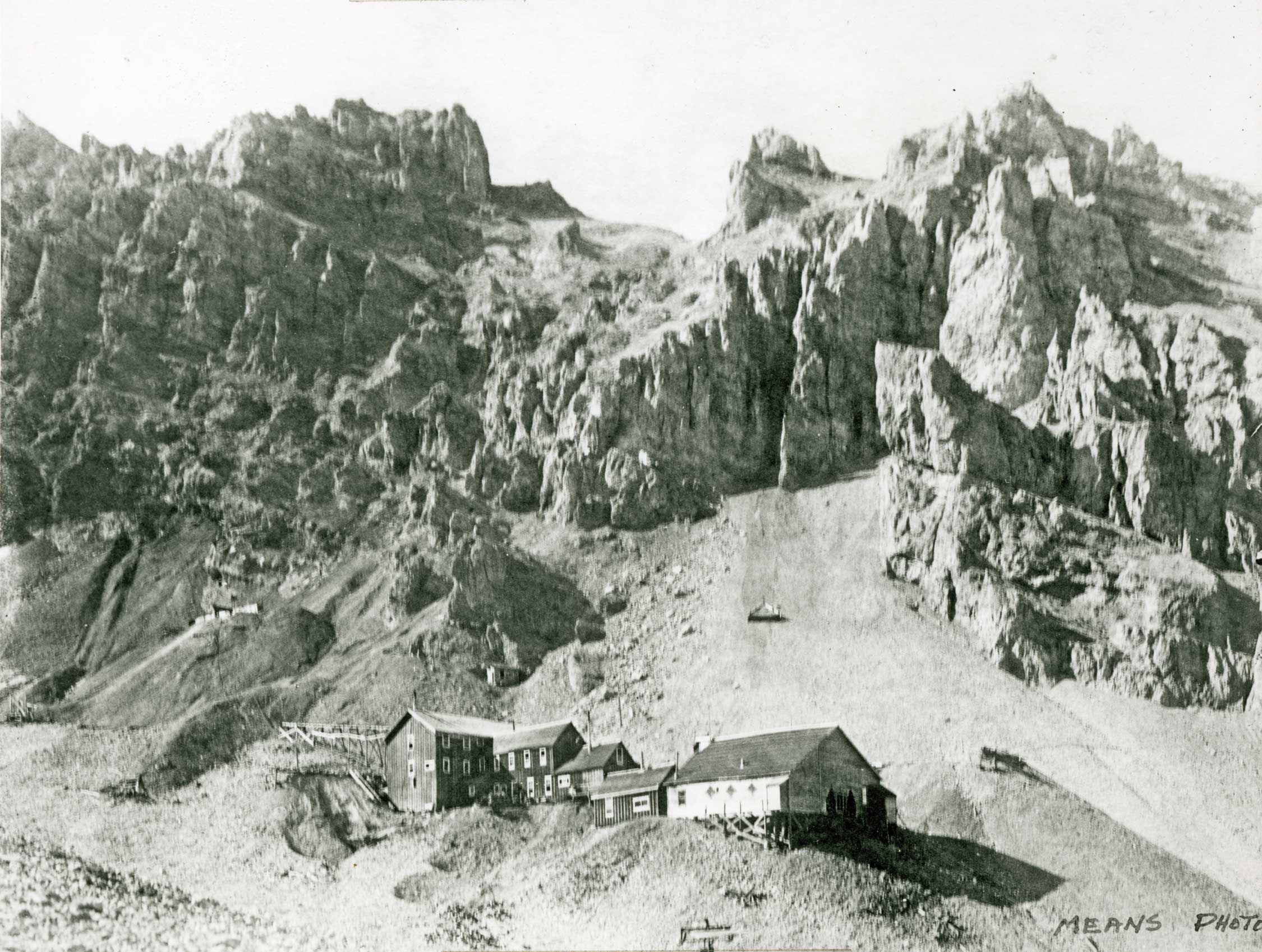
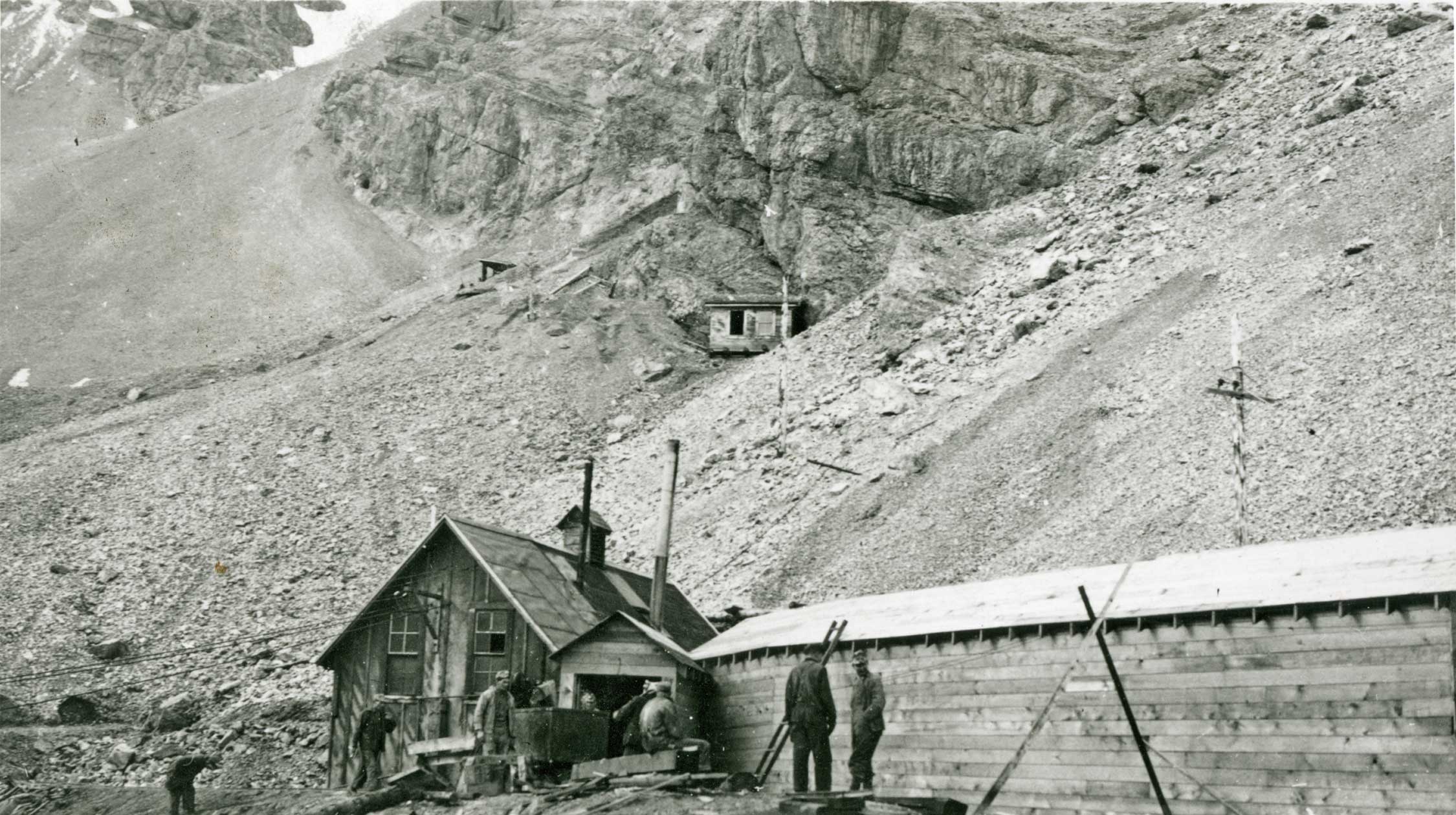
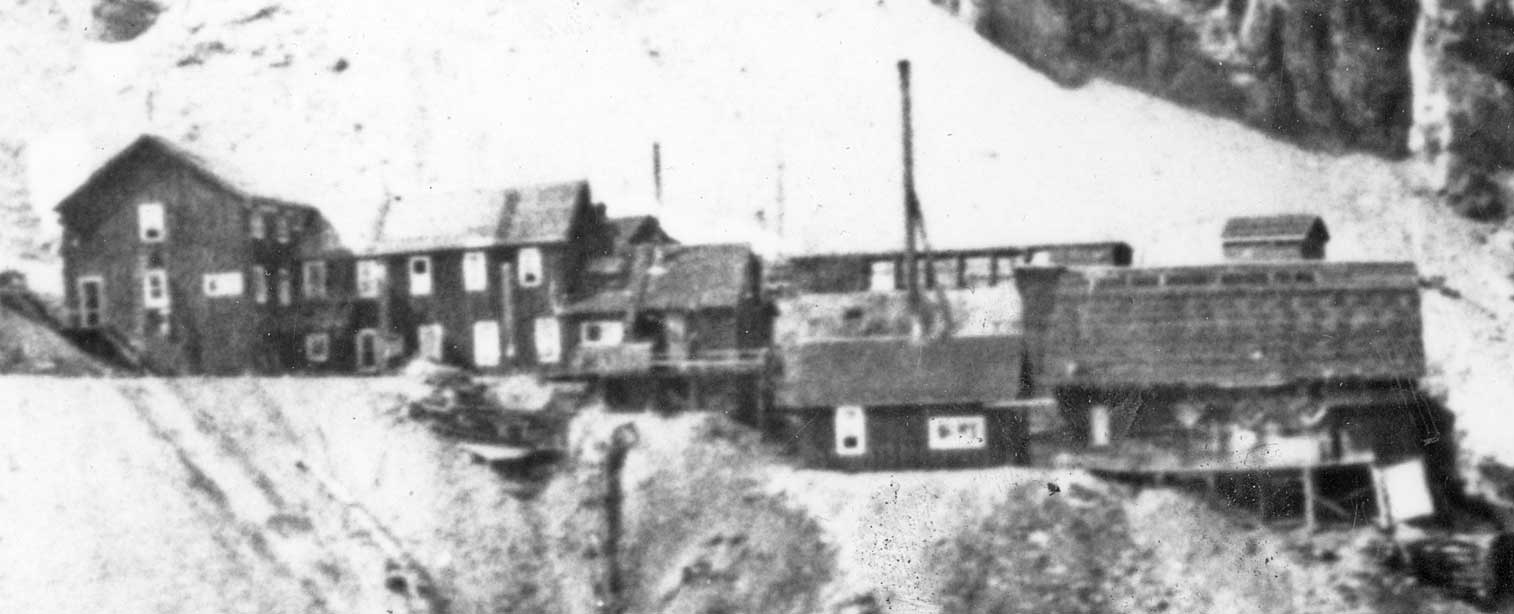
ML upper camp


The Mother Lode in its cliff-side setting in the early 1920s
The other amenities were the normally excessive heat coming from the boilers, the small, two-man rooms that allowed a measure of privacy, and the ranch-style, home-cooked meals expertly prepared by Sato.  With the diversions of card games and billiards, magazines and books, and access to hot coffee and extra between-meal snacks, life at ML was at least tolerable.  For the Indians, it was another exciting and wondrous adventure.

          Billiards was the favorite activity of the Chitina Natives. The two Butte Montana miners had been giving them a run for their money on the table. Billiards competition had kept life at camp interesting.   Neither Jeff nor Darrell were particularly friendly toward the  Natives.   Jeff kept making loud references to the “reservation Indians”  and  the “siwashes.”   When Jeff challenged Johnny to a fight,  he  quickly found that the half-breed’s left-hook was deadly. 
 
           Cap was ready to put a quick end to Darrell, who was much larger than he, should he try to intervene in the altercation between Johnny and Jeff, but Darrell backed off. Neither Ahtna Indian had any intention of being run out of camp by what they considered “stupid white-men who don’t belong here anyway.” They would leave camp only when they were “damned good and ready.”  Not before.  Eldon found out about the confrontation.  He pulled the Montana men aside, leaving the Indians to Frank.

          “Bet you guys think you’re pretty smart.”

          “Smarter than any damn half-breed siwash.”

          “Then, if I were you, I would stay clear of the Indians.  I can’t save you from being wiped all over the floor by those two if they ever get mad.  I guess you don’t know, but the bigger one is a champion boxer.  He wiped out five men single-handedly right here at camp.”

          “Not the half-breed that knocked me down?”

          “Oh, I wouldn’t mess with him, either. But the other one is just plain deadly. He eats bullets for dinner. Leave them alone, boys.  I can’t save you if you start anything.”

          Frank stopped in the billiards room after the others had left.

          “You guys are determined you’re going to embarrass me.”

          “What do you mean, Frank. Jeff asked for it.”

          “It doesn’t matter. You know how management is.  We know about the fight at the rec hall, the railroad station and at Erie. It seems to follow you around.”

          “Has it ever occurred to you, Frank, that some of the men around here just don’t like Indians?  We live close together.  Things happen. We’ve never started anything. How’d you know about the station and Erie?”

          “We always know about everything that goes on here.”

          “Then you know we don’t want to fight.  We’d rather beat these guys at pool than fight.”

          “I see I’m not getting anywhere with you two.”

          “What did you expect, Frank?”  

          “Nothing. I wasn’t expecting anything, Johnny. Not from you two.”

          Frank left the room in frustration.  Like most of the engineers, Frank was quiet and generally steered clear of the working men.  As a matter of long-established practice, engineers did not associate with the miners.   In the relatively confined and isolated quarters of the Mother Lode, this  rule was relaxed.   Frank sometimes played billiards with the others, and was even up to a game of poker on occasion.  He wanted the men to know who he was. 

          Now he sat at his usual position at the head of the mess hall table.  His back was to a window looking directly into the gulch.  Cap and Johnny were sitting with him having some of Sato’s coffee when Eldon Johnson entered.  Johnny saw Eldon coming, elbowed Cap, and the two exused themselves and headed for table where the huge coffee samovar sat.  

          Eldon sat next to Frank.

          “It looks like hell out there.  All I could see was a lot of blowing and drifting snow. I had hoped it would taper off.  Evidently not.  We’ll avoid using the jig back today in favor of the Rhodes adit.  Scott’s team has cleared a path to the adit snowshed.  You engineers should have connected it directly with the boiler room.  It would have been much easier than fighting all that blowing and drifting snow.”

          “Eldon, I’ve had Sato and Jim make up lunch boxes for the men.  Under these circumstances, there’s no point in making a long trip back to camp for lunch, especially for those of you working the upper levels tonight.   Once the path is cleared to the shed, have the rest of them grab their lunches.”
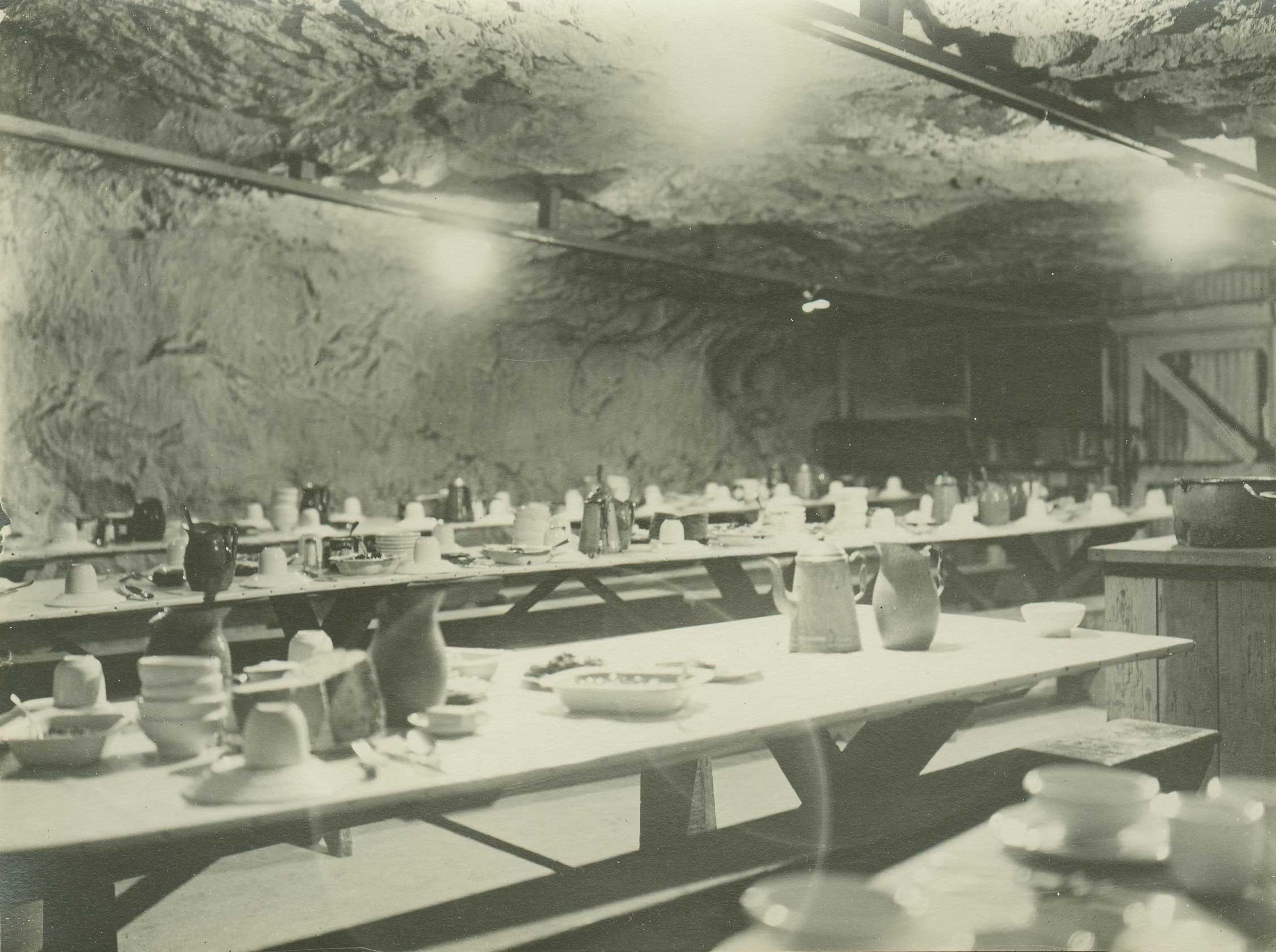

ML underground dining


Underground dining hall inside the Mother Lode mine at the 1250 level  -W.A. Richelsen


          Eldon looked at his team of six--the two Montanans, the Norwegians and the Indians.   He had more confidence in the Indians than the rest because he knew that neither would run in the face of adversity.  He was not so sure about the others.

          “Hmm, that is odd isn’t it. We call the whites like Jeff Boyd and Darrell Everitt  Americans, but we don’t call the Indians Americans except when there’s a war.  Then we draft them.  We can draft them for war but we can’t let them have alcohol.  We talk in front of them sometimes like they’re not even there.  They must think we’re incredibly arrogant.”

          “There’s little doubt about that, Eldon.  Cap isn’t impressed with us at all. Johnny keeps him reined in.  Yet the half-breed has also expressed considerable resentment about some of our practices.   He’s right, you know.  No way around it. His people were here long before any of us.  It’s really too bad that Johnny feels the need to constantly prove himself as equal or better than anyone here.

          “As for that fight, if it were anyone but Johnny, I would have sent the man down the road for striking Jeff Boyd.  I probably should have terminated Jeff, however, whom I don’t care for anyway.  On the other hand, we really need to get this job done.  I can’t spare anyone.”


          “Cap doesn’t say much at all, though you can tell by the look in his eyes where he stands. He’s got a fearsome look. No one wants to challenge him, and he always backs up Johnny, which is probably why there have been so few fights around them.  There’s another side to Cap that whites don’t seem to see.  I hunted with him, and I can tell you that he is not exactly what he appears to be.  You’d think he hates us. What he really dislikes is arrogance and stupidity.  He just wants to be left alone to pursue his own life without being told where he can or cannot go on land he believes he was meant to walk on because his ancestors walked on it.  But I don’t think Cap hates anyone.  Anyone fortunate enough to become a friend of Cap’s would probably discover what true friendship is.  He’s a very deep and spiritual man.”

          “I think you’re getting carried away with this Native-stuff, Frank.  But it’s appealing, I guess. I don’t know. Those guys work hard and they’re reliable. To me, that’s all that matters. I don’t want to even try to understand them. It’s all beyond me.”

          Eldon watched Scott lead his assembled crew down the hall toward through the barracks towards the boiler room.  He signalled the others to follow that group.  
 
          “Are you ready, Frank? This is your big day. Didn’t you say you were going to discover another Mother Lode today?”

          “Eldon, enough of that. Let’s get on with it. Sato, I’ll be looking for some hot coffee and a hot sandwich when I return.”
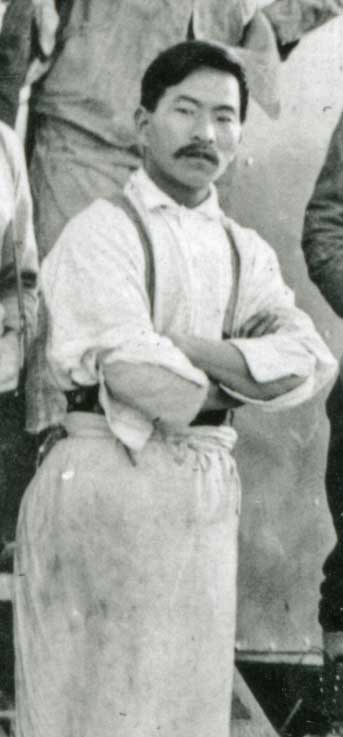
Japanese Cook
Kennecott Japanese cook  --Cordova Museum
          Sato was a large man, who was also very quiet and mature looking . He nodded and then bowed.  He turned to Jim Tanaka and said something in Japanese. Then the two returned to their work in the kitchen. 
 
          The snowshed over the main portal had a heavy door which opened in the direction of the boiler plant.  The longer part of the snowshed led downhill toward an old waste ore dump, wich was a tracked ramp extending well above the rapidly sloping hill.  On a good day, the elevated wooden ramp had a clear view of the lower camp, a mile away in tram-line distance and about 2,600 feet straight down.

          The old wood structure was a relic which was built in 1914.   Waste ore was no longer dumped on the McCarthy Creek side of Bonanza Ridge, because there had been  no mining development at the 800 level since 1918 when Kennecott took over the site.    Frank and the eighteen men assembled in the wide area just inside the main door. Frank, with the help of Eldon, pushed the heavy door shut.  They were moving against the force of the wind and the ever-advancing snowdrifts. Eldon turned, leaned against the door he had helped close, then spoke to the group.
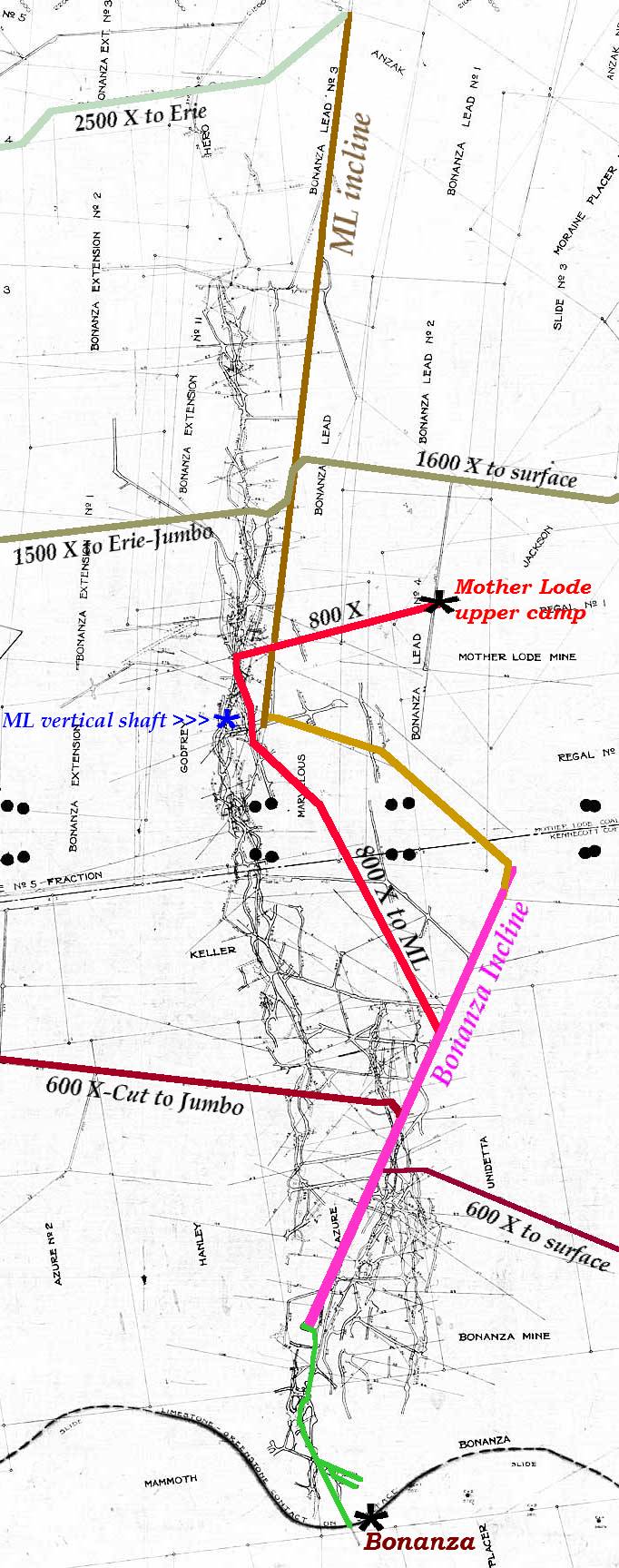

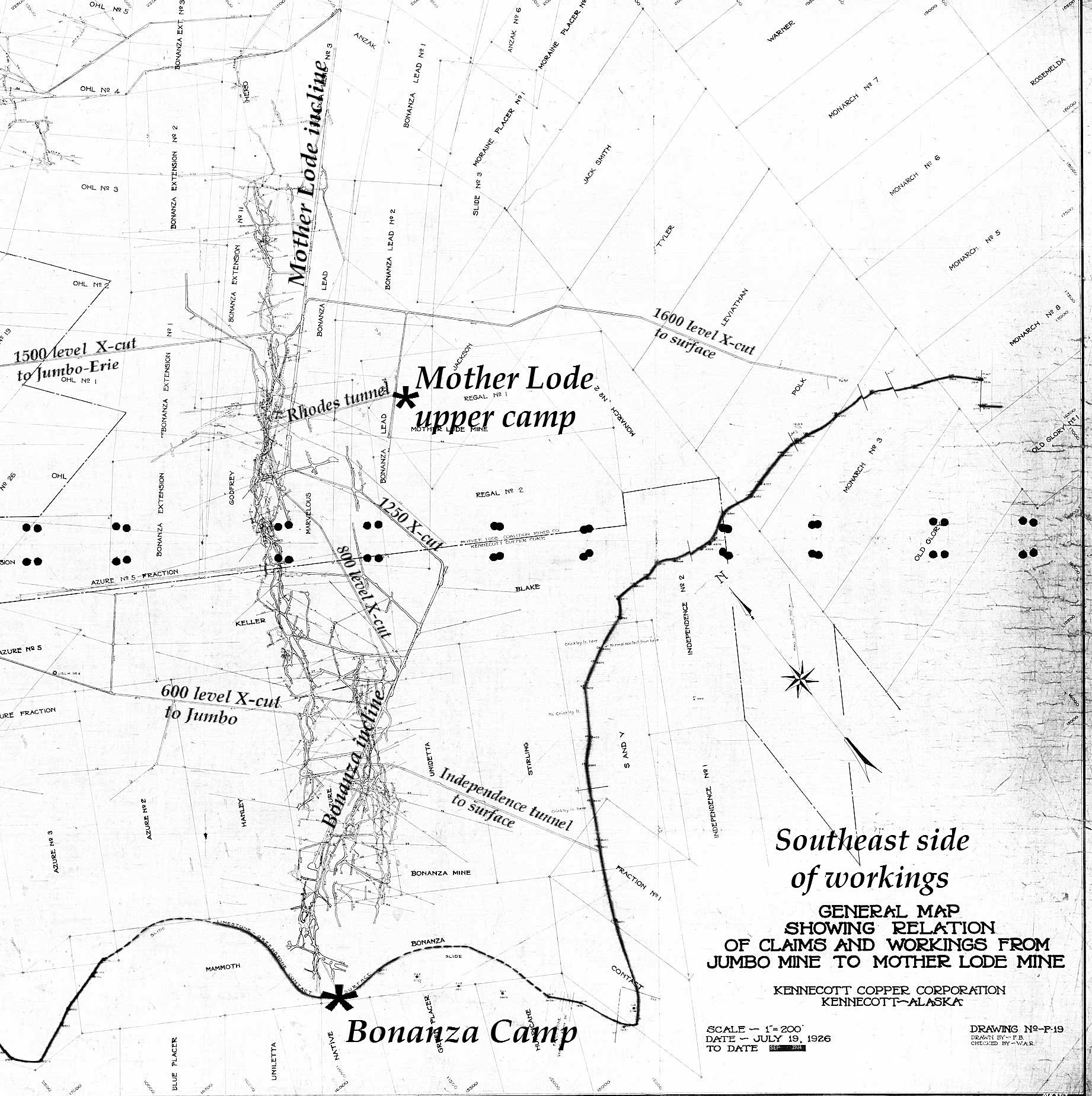
Bonanza-ML workings
Map of the main workings of the Bonanza-Mother Lode mines (looking down) On the left is
the high end of the workings, including the head tram for the Bonanza and the Bonanza adit at the 6,000-ft level. At the center dividing line between the mines the level is approximately 1,250 ft, which was 1,100 feet in elevation lower than the Bonanza 150-level adit on the left. Where the Mother Lode surface camp is shown is the 800 level--650 feet lower than the Bonanza, but still well above the Mother Lode workings beneath it. The map shows two incline shafts. These were the main access tunnels. The 30 degree Bonanza incline begins at the 150 level (Bonanza Camp level) and terminates at the 1250 level where a level cross cut connects the Bonanza workings to the top of the Mother Lode 26 degree
incline shaft. From the top of the Mother Lode 26 degree incline the shaft continues all the way down to the 2,800 level at the top of this map. 


          “Since both teams will be blasting, we’ll keep in constant contact.  No blasting if you don’t know where everyone is.  Scott will take most of you back to the 400 level.  I am taking the rest all the way up.  Each of the six of you with me will trade off running the wire spool all the way up.   Jeff or Darrell can do the splicing, since they’ve done this before.  Once we’re at the 100 level, we’ll set up the telephone base.  Then we’ll get on with the business of mining.”

          The group began the relatively long trek to the main vertical shaft.   Then Eldon’s team  took the double compartment elevator to the Pittsburg level.  From the Pittsburg 600 level, the team began a long series of climbs through narrow vertical shafts with ladders to the 400, and then the 200, and finally 100 level.  All the way up one of them was unreeling the new telephone cable. At each level, a new man took the spool.  It was exhausting work just getting up there. 
          Scott’s team of ten resumed work on the 400 level, where a cut-and-fill operation was in progress.  It was  a cleanup of old workings in a search for unknown ore extensions. 

          The smaller group finally reached the very highest level, not far from the top of the ridge itself.  This was the most intriguing area as far as Frank was concerned. It had never been well explored, though Frank had already crawled through the area with W.A. a few months before. None of the engineers considered this area as worth the effort to examine since it was a thousand feet above the known ore beds.

          Frank realized that it would take longer than he originally estimated before he made it back to camp.   That was fine with him.  Even though everyone else had brought lunch, Frank was planning on heading toward the main Mother Lode lunchroom deep underground at the end of the 1257 cross-cut once he had completed his work in this very high area.  All he had to do was take the vertical shaft elevator from the Pittsburg level down 550 feet to the top of the Mother Lode incline  at the end of crosscut 1257.   The men who ordinarily ate there would be  working stope 1252 and other stopes  at the 1000 and 1400 levels.  This was the center of the main Mother Lode workings.  The crew of nearly forty was under senior engineer Melvin Smith and foreman Jack Morris.  All of them worked out of the Bonanza main barracks.  

          When the small crew finally worked its way nearly to the top of the complex Marvelous stope and had set up the telephone communication,  Eldon pointed out the area he thought should be considered for prospect tunneling.  Frank examined it, but saw little in the way of encouraging copper stains.   This area was almost at the very top of the dolomite limestones at the point  where the McCarthy shales begin. This was a contact zone rarely seen by anyone.  It was not an area likely to contain any copper ores.

          “This is almost like blind prospecting, ”  he told Eldon.  “There is very little here worth pursuing.”   He looked around and spotted a small tunnel leading north. 
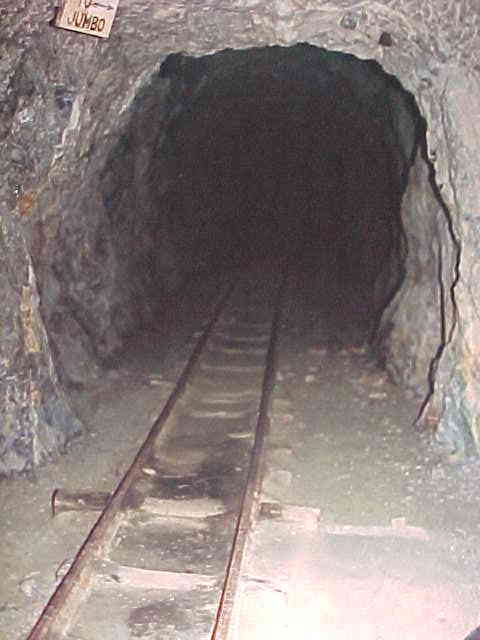

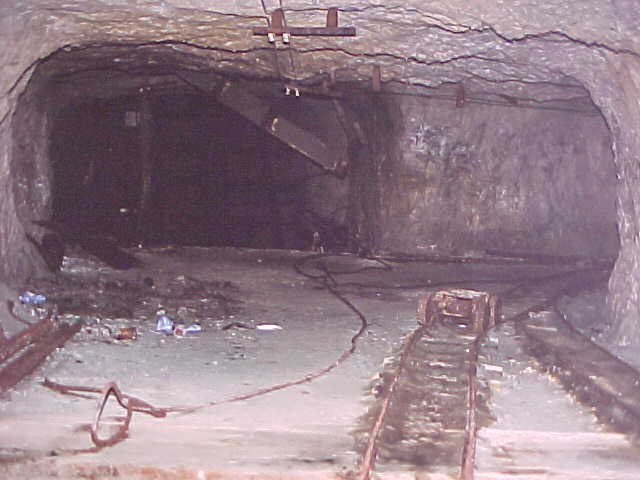
ML tunnel
The 1500 level cross cut tunnel near where it intersects with the Mother Lode incline.  
--Curvin Metzler
          “Let’s head that way.  If I don’t find anything through there, we’ll just close out this area.”  

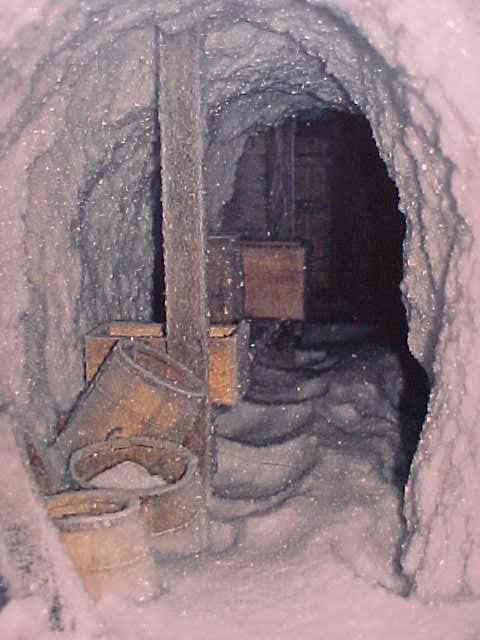
          The group of seven followed Frank, who was looking intently for any sign of copper staining along the walls.   There was ice everywhere, but there was also water that had accumulated along the floor.  Because the walls were frosted, it was particularly  difficult to see anything.    But near the far north end of level 50, Frank found what he thought he was seeking. It was an exposure of copper nearly two feet wide.

          “Wow! Not much by Jumbo standards, but there wasn’t much to see at the surface of Jumbo, either.  I wonder why they didn’t pursue this one.  This is better than anything I’ve seen in the lower levels.  If it leads to anywhere at all we might be on to something.  We’ll just have to find out.”
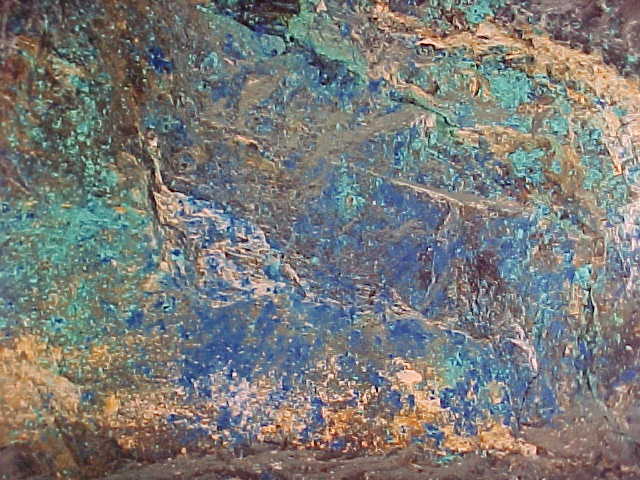
carbonate stains
Carbonate stains of Azurite & Malachite underground in the Mother Lode     --Curvin Metzler

Continue

12 February 2011

Chapter 48: The Saghanni Ggaay at Mother Lode


ML upper camp jig back
Jig-back tram at the rear of the ML upper camp plus two Marvelous Mine snowsheds in front of mine entry points.
       

        Eldon Johnson could not sleep.  He got up from his bed wearing a heavy tan-colored union suit. Most of the men slept in the full-body woolen underwear, as a protection against the elements.  It was an Alaskan pioneering tradition that all white men wore and slept in the heavy wool.  Adjusting to the scratchy wool was one thing. When it was worn and slept in several days running, a man would sometime find he couldn’t stand even the smell of himself, much less tolerate the odors of the others around him.
 
          At least here, we’ve got working showers.  Amazing that the engineers were able to find a way to keep them running. It’d really be rough around here without a way to clean up. Smelly, too.

          It was cool to the point of being uncomfortable, even with the radiators running, due to the constant winds sucking the warmth out of the large building.  Realizing he could sleep no longer, Eldon pushed the two heavy woolen blankets and the freshly laundered sheets off himself, pulled on his heavy working trousers over his union suit and headed out his private bedroom door.  He turned left and walked up the hallway toward the mess hall. A light was flickering through the partly-open door.
          He pushed the door open to find Sato already preparing meals for the day.  The electricity was indeed oscillating. The light bulbs were dimming, then brightening irregularly.

          Oh, oh.  That’s not a good sign. The high-tension lines are probably being whipped around over on Bonanza hill.  Not good.

          Sato was facing away from him, stirring a large pot of stew on the cast-iron stove.

          All right! Sato’s got the coffee made.  Can’t sleep anyway.  Might as well sit down and play a game of two of solitaire.      

          Sato turned around and waved his hand to Eldon. He was not known to be much of a conversationalist.

Japanese camp cook
Japanese camp cook at the Jumbo Mine  --Cordova Museum

          “Eldon! I see you couldn’t sleep, either! Bring your coffee over here.”

          It was Frank, still in his heavy robe, pouring over a handful of mining maps. No one but the engineer wore a robe into the mess hall.  Frank practically lived in that seat on the south end of the long dining table. The lights over it were also flickering.

          “You live in that seat, Frank?”

          “Guess you can say that. Look out the west window, Eldon.”

          The Marvelous Project foreman took one look up the wildly-swinging line of the 980-foot jigback tram and decided the men would have to take the
long route through the Rhodes tunnel to the new vertical shaft extension.  It was the long route to the top of the workings.  


          Lord, look at what the gusts are doing to that tram!  No way am I getting on that thing.  We’re taking the tunnels today.


          The tram had been built to provide access to the Marelous workings before the Pittsburg tunnel was connected to the Rhodes by the deep ML vertical shaft.  From the ML camp, the jig-back was by far the quickest way to the upper-level diggings.  
  
          High overhead the winds were blasting the lightest layer of snow like a raging sandstorm off the top of the heavily-stacked snow accummulations which had developed into a long series of cornices along the top of  Marvelous Ridge . 

          It was enough to make Eldon shudder at the thought of what could happen if one of those buckets ever flipped with a man in it. Then he started thinking about the cornices high above, threatening the camp itself.  Eldon decided to think about something else. It was still several hours until the shift started. The  entire crew would be getting up for another shift in four hours.  Due to daytime melting conditions  in the upper levels of Marvelous, the engineers had decided to do all the work in the early morning hours. The only shift at ML-Marvelous began at midnight.

          The crew of eighteen included Eldon’s assistant foreman Scott Wilson.  The operation involved two working sites at relatively distant locations, so the assistant-foreman position was crucial.   The  sixteen miners and muckers were  paired off into teams and matched by nationality.  Most were Norwegians, Swedes, or Finns.  There were only four Americans, including a rough looking duo from Montana named Jeff Boyd and Darrell Everitt.   They were new to the area, but had mining experience at the Anaconda.   Then there were the two Chitina Indians, Johnny Gakona and Cap Goodlataw.


          I don’t care what anyone else says.  Those Indians are as tough and daring  and even reliable as anyone I’ve worked with. They must have come here to prove a point. They’ve certainly made one in this camp.


          The next thing Eldon knew, his assistant foreman came walking through the door.

          “Eldon! You’re up already.  Can’t sleep, either? Say, it looks downright hostile out there. Does this mean we’ll skip the tram and go for the Rhodes tunnel route instead?”

          “I sure does, Scott , I’m giving you the larger team to continue working the 400-level.  I’ll take a smaller group of six and commence work on the 100-level.”

          “That’s a long run up there.  So you’ll be the first ones working up there?”

          “They will, Scott.  I intend to begin blasting up there. It looks like the last place the old company was working.  I’m going up there to check it out for myself. I have a feeling we just might find something of interest.”

          “Feeling? Since when do engineers have feelings?”

          “Hunch.  It’s a hunch, Scott.  You’re right. I don’t have feelings.”

          “That’s a long series of raises going that direction.  No easy way up using incline shafts or elevators, only vertical raises you’ve got to climb a hundred feet at a time.  You’ll be worn out by the time you get there.”

          “Climbed through the whole area already, Scott.  It’s nothing but work just getting there, but no other way up.”

          “Or getting back down, Frank.  Sometimes it’s a hard going down as up.”

          “You’re the one who’s taking the crew up there, Eldon.  Hope you’re up to it, old man.”

          “I may be older than the rest of you, but don’t you underestimate us duffers.  We made this country what it is, you know.  I’ll be fine.  It’s you I’m worried about.”


ML barracks


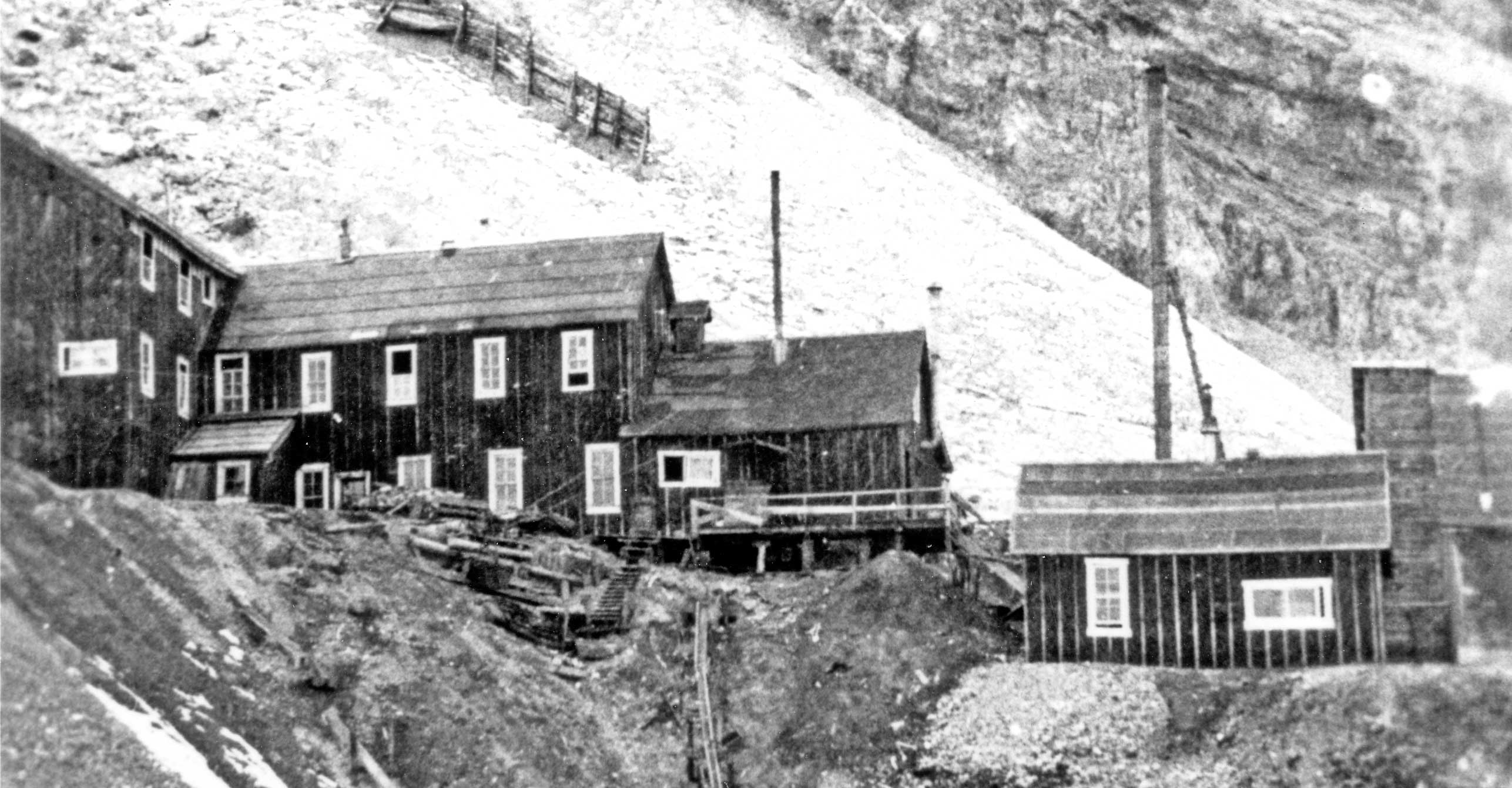
Mother Lode upper camp: New
Kennecott-built barrack; old ML Company barrack & kitchen-dining
room plus what is probably the office.
          “I climbed all over the Rockies.  Already been at the top of the Marvelous and on the ridge above it making survey marks. I think I can take the physical stress.  Don’t underestimate us younger guys, either, Eldon.”
           “I’m taking the two Indians, and placing them on the blast line. I’ll team them up with the Montanans and one of the Norwegian groups.  The rest will go with you, Scott.  We may be doing some extensive blasting, but it shouldn’t affect you down there at the 400 level.”  
          “That’s fine, boss, but please warn us anyway when you’re about to blast, so we can duck.  After all, we’re still working below you. Never can be too safe.”
          “We’ll keep in close communication.  I’m going back to try to get a few more hours rest before the big night on the hill.”
          “Me too.  What about you Frank?”
          “I’ve got too much to do. Never be able to sleep now, anyway.  I’ll sure still be here when you guys get back up in a few hours.”
          The Chitina Indians were in a sleeping room next to the billiards open area.  Both were sleeping fitfully.  Johnny woke up first when he heard Scott’s door close somewhere down the hall.  The window faced south toward the gulch. It was rattling in response to the gusts.  Johnny pushed his heavy potlatch blanket aside.  Below it were two more blankets and a heavy sheet.  He reached over and felt the radiator.  It was hot, but the room felt drafty and cool. The window had no blind. It was still light outside. Johnny stood up, feeling the cold air against his bare upper body, he realized he was wide awake.  He looked out the window, became alarmed and immediately went over to the other bed to shake Cap awake.
          “Cap! Wake up.  They’re out there flying around again.”
          “It’s cold in here, Johnny. I’m comfortable under these blankets and sheets. Why did you have to wake me up? Is it time already?” 
          “I said they’re riding the wind out there.  It’s the Saghani ggaay!”
          “Now you’re beginning to sound like me, Johnny.  They’re probably just saghani looking for white man’s trash. How many?”
          “Four large ones.”
          Caps eyes opened wide and he bolted out of bed.
          “Wow, it’s cold on out here.  The wind must have really been busy to suck out so much warm air.”
          He touched the radiator and quickly pulled back his hand.
          “Hot! Boiler’s working fine.  It’s just all that wind pulling out the heat.  Whew! No wonder the white men wear those wool suits all the time.  I’m getting dressed!”
          “Look outside, Cap.”
          Cap grabbed part of his clothing and headed for the large, uncovered  window.  It was clear of frost, but rattled with the wind. Cold air seemed to seep right through the glass.  Outside was a field of bright white, making the natural features difficult to distinguish.  
          “Can’t see much of anything out there.  Just lots of heavy snow.  I don’t see any saghani, either.  Let’s go to the mess hall. It’s still early, but I’ll bet Sato’s got some coffe going.”
          Johnny looked again for himself. Nothing was out there.
          

         “I must have been dreaming, Cap.”


         “Don’t let that big imagination of yours get to you, Sla’cheen.  This is a spirit-place.  There’s something here that’s always with us. I know that. I’m not so sure, but I think it might be kay-yee-gay. It bothers me enough without you making it worse.”
          They wandered into the hallway.  A brisk breeze was running right up the narrow, straight passage from east to west, up the hill.
          “Just like in the tunnels, Cap.  Worst I’ve seen it in here.”
          Johnny pushed open the door into a room that was warm from hours of cooking.  Sato had been busy. The lights were flickering, but otherwise, the place seemed unusually calm, warm, and comfortable compared to outside, or even down the breezy hall.
          “Johnny and Cap. You’re up early!  You’re not the only ones.  Seems like no one is sleeping well tonight.”
          “Frank! Don’t you ever stop working?”
          “Naw! Grab some coffee.  Join me. I’ve looked over all the maps and charts I think I can stand for a few hours.”
          “Really?  Let’s shoot an early game of pool, then.”
          “Billiards, you mean?”
          “Pool or billiards. What’s the difference?  We’re still going to beat you.”

          Frank considered the proposition for only a moment.

 
          “It might be a little cold down there.  I’ll stop by my room and get my outer gear on.  See you guys down there.  Thanks for the invite.”
          Sato was still busy at the cook stove.  Jim Tanaka had joined him and was busy preparing lunches the men could carry to work.  Sato smiled at the three men as they left the mess hall.  Jim waved.  
          “Try your hand at pool, Jim?”
          The young cook’s assistant looked at Sato.  Sato, who had returned his attention to the cook stove, nodded without looking at his young assistant.
 
          “You have half-hour, Tanaka.  Come back to help with breakfast.”
          Jim’s narrow, oriental eyes widened with a child’s look of happiness.
          “Boss Sato let me go!  I’ll be right down as soon as I finish packing lunch.”
          Ten minutes later Frank and Johnny teamed up against Cap and Jim.  The room was large and drafty, but the men became completely engrossed in their game.  They were able to play two rounds before Jim realized he had to return.
          “Never played against any of the orientals before,” Johnny observed softly.
          “He plays well.  Must have had practice wherever he came from,” Cap responded.
         

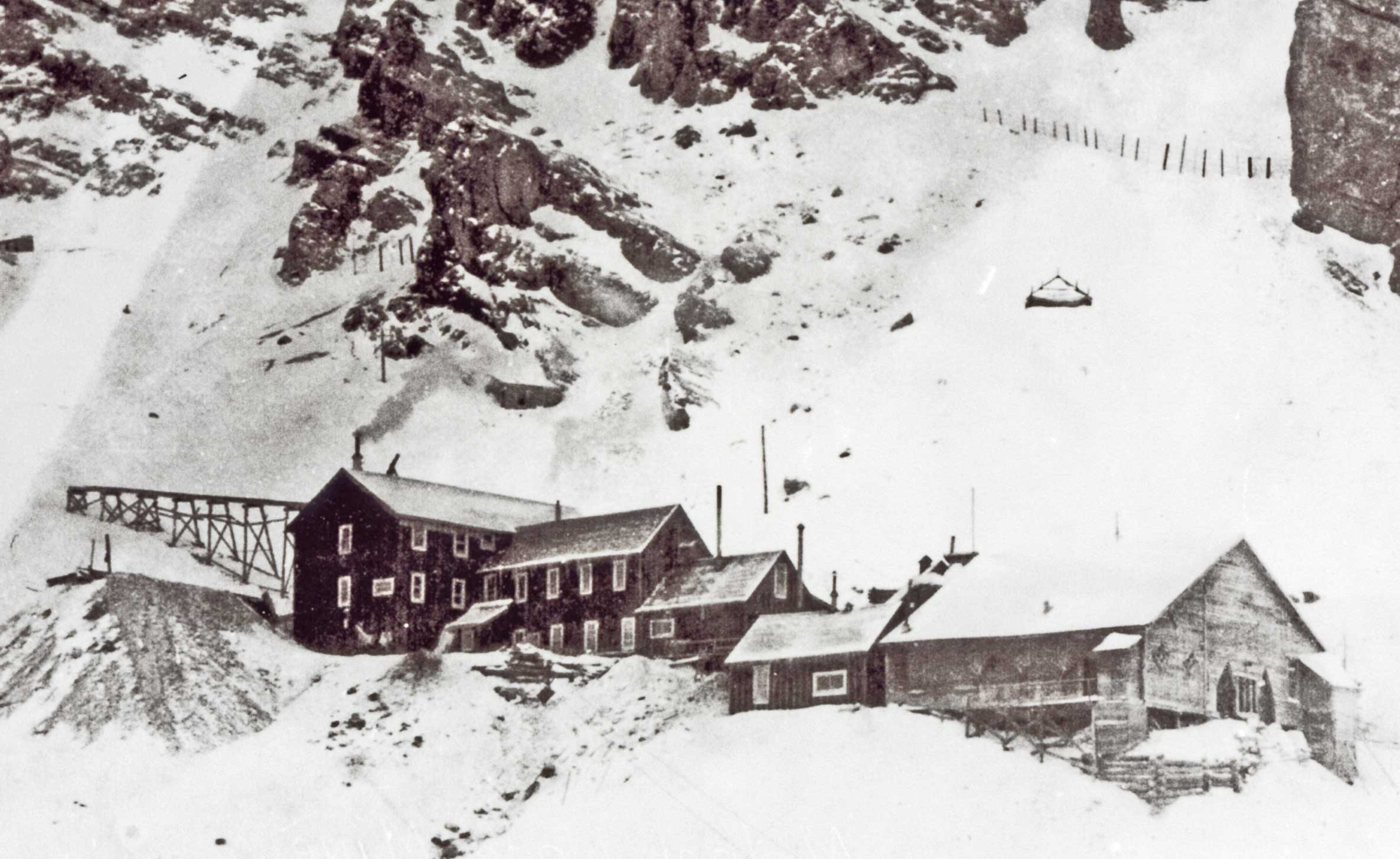
ML
The Mother Lode camp at the beginning of winter


“He’s from Juneau, guys.  Same as Sato. They’re probably distant relations.  The super recruited several of them from Juneau.  Look, it’s been great playing against you, even if Cap and the Jap won.”
      Cap gave Frank a stern look.
      “He told me he’s Japanese, not Jap.  I know you guys call them Japs, but I don’t think they like it too much.”
      “Sorry, Cap.  I didn’t know that.  Won’t do it again. Next time I want to team up with you.  Maybe I’ll finally beat Johnny that way.”
      Cap smiled at the thought.
      “Smart white man.”
      The wind blasted the end of the building particularly hard.  The building shuddered and the large windows rattled loudly.  A cool breeze swept through the wide room seemingly right through the east-facing wall from the downhill direction.
      “Wow, it’s getting vicious out there!  I’m beginning to think I’d rather be somewhere else. This reminds me of one of  the worst winter storms I’ve seen in the Rockies. We call them blizzards down there. As they’d say, ‘not fit for man nor beast.’
      “Odd though,” Frank said as he looked out one of the windows facing south,
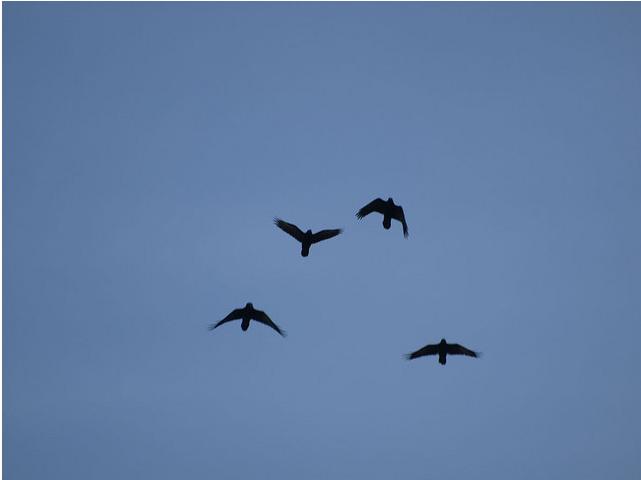
“those four large ravens circling around out there don’t seem to mind this wind at all."


raven

Chapter 47: Reopening the Mother Lode


Bonanza Camp
Bonanza Camp in the 1920s    --Ralph MacKay, AK & Polar Regions Archives


Head engineer Walter Richelson sat at
the Bonanza dining table with Frank Buckner and Eldon Johnson, the Erie foreman
now assigned to the Marvelous project.
         
“It won’t be long now, Frank, before we get our first close look at your new
assignment.  It might be snowed-in over there, but we can dig it out.”
         
“I’m excited to be starting this project, Walter.”
         
“I’d wish I could share your enthusiasm, Frank, but I’d rather we never
re-opened that camp.  If it wasn’t for Gladys, I’d never let you take the
assignment. I’d do it myself, because this one is going to be a particularly
tough one.  It’s not one I’d wish on you or even on Russell.”
         
“I’m used to being in the heavy snows of the mountains, Walter.  I don’t
see any real difference between Wyoming and here.”
         
“I certainly hope you’re right, Frank.”

They were being
served breakfast by a seventeen year old Japanese waiter they knew as Tanaka.  
He was quick and appeared to be eager to please.  None of the officials
knew that Jim Tanaka was a year underage.  He had come up with several
other Japanese men who joined the mess crew only months before.  Tanaka, 
because he was lowest on the list, had been assigned to the Mother Lode upper
camp crew as the waiter and bull cook.  His boss, Sato, was the senior cook
for all the camps and was normally assigned to the Bonanza.  Sato had
volunteered for the ML, since he was looking for something different, but Tanaka
had to be picked, as none of the younger Japanese wanted the job at a camp which
some considered hexed. If nothing else, it was certainly isolated.
         
The crew of eighteen miners included foreman Johnson and a group of men he had
specially selected.  Among these were Cap Goodlataw and Johnny Gakona. 
They were carried on the roles as Americans, but treated as a distinct
nationality, just like the Japanese.  The rest of the miners were either
white Americans or Norwegian nationals.
         
Eldon sat at the other end of the table with Johnny and Cap.  He needed two
miners to accompany the group on this trip.  He selected the Indians as
being most suited for this particular job.  The five men--the two
engineers, the foreman and his two miners--were about to take a preliminary
inspection of the camp and the jig-back tram system which connected the ML 
to the Pittsburg adit.
         
“Eldon picked two of our finest men for this first dry run.  They’d get us
through just about anything.”
         
“Of that, Frank, I have little doubt.”  
         
In a way, Frank had staked his reputation on these two by consistently backing
them from the very beginning, starting with the power plant job three years ago.
He  remained the young men’s most consistent and fervent ally ever since. 
However, few men besides the small engineering staff and a handful of the mine
foremen were aware of Frank’s role. The young engineer preferred it that way. 
The Chitina Indians likewise preferred to remain as inconspicuous as was
possible while working at Kennecott.
         
“We have reached the big moment, Frank.  I’m about to give you your first
independent project assignment.  If all of you are ready, we will head on
out.” 


Bonanza-ML workings
1926 map showing relationship of Bonanza workings to Mother Lode (ML) workings. Major tunnels,
crosscuts and the two inclines are marked, as are the locations of the two mining camps.
         
 
Walter stood up and the others set down their coffee and rose to leave. 
They headed to a stairwell leading downstairs into the drying room.  All
the outer clothing, helmets and lighting equipment were kept there, near the
showers and washroom.   The men checked their working gear, 
climbed into the heavy outer wear and rubber boots,  and exited the long
room by the rear door.  
         
The rear exit was directly below the kitchen. Just outside a snowshed covered
the entry into the 1,503 adit.   This is the main entry into the
Bonanza.  Eldon pushed the heavy wood door in and held it open while the
others quietly entered.  They were immediately hit  by a wind which
ran continuously through the tunnels, but which is more pronounced in some areas
than in others.  The walls at the adit level were icy due to relatively
heavy moisture content  on the upper levels. The seven by seven tunnel led
into a wider area after about 100 feet.  It was very noisy, due to the
proximity of the compressors, which were located in a wide area just off the
tunnel. 
         
Tunnel 1,503 merged into 1,501, which was the ore-haulage tunnel. This tunnel
led to the top of the thirty-three degree incline. The men entered the skips and
began the dark descent to the 800 level.   By pre-arrangement, the
skip stopped at that level so the men could exit. Eldon signaled the operator
above by activating the bell alarm. The skip then continued downward into the
blackness.  
         
The 800 level crosscut struck north-north-east in the direction of the Mother
Lode boundary.   The party encountered a heavy door at the boundary,
which Eldon held open.  The wind blowing through that area was even more
pronounced, as the tunnel led directly into some enormous man-made cavities, and
to the deep vertical shaft. These features helped accentuate a mini-underground
weather system.


Underground5

Main haulage tunnel 
--Curvin Metzler

Underground7
 tunnel & door near the
Mother Lode 1600 adit --Curvin Metzler


Johnny and Cap looked at each other grimly.  This  crosscut had an
ominous feel to it which seemed to strengthen in the direction they were
heading.   They passed a wide area which surrounded the vertical
shaft. Then the men had entered the Rhodes tunnel  which headed east and
then south, exiting at the ML camp. It became quieter through this area. 
No work had occurred there in several years.  Most all the recent
development had occurred several hundred feet below. This area was barren of
ore. 

         
The meager carbide lights coming off the hard hats provided all the illumination
in this final section. The lights on this end were not working.  Richelson
made a mental note to have the electrician turn on the lights on this end.  
Now they were finally approaching the doors which led outside into Mother Lode
Gulch.
         
Eldon pulled the door.  All of the outer doors opened inward in order to
prevent snow drifts or ice build-up from  blocking them shut on the
outside.   The men walked into a wooden snowshed which led another
forty feet to the outer door.  It was noisy in the snowshed.  Winds
worked their way through the wood, along with snow crystals, which struck the
faces of the men. When Eldon pulled at this final door, snow immediately filled
the area. He was immediately partly buried in it.  Frank, Eldon, Johnny and
Cap grabbed the tools which had been left inside the shed just for this purpose
and immediately set about freeing Walter.  He was quickly freed.  The
men then set about digging their way toward the dark hulk of a barrack, visible
in the distance.  Snow had completely enveloped the snowshed adit. It took
considerable work to break through it and work their way out into the open. 


ML adit
The 800-level adit, also known as the Rhodes adit, was the main access from the upper Mother Lode map
which tied it directly into the Bonanza Mine system.       --UW Special Collections
         
 
“I hope this is not a sign of things to come over here,” Frank yelled to Walter.
The wind was so noisy that he had to shout in order to be heard.
         
Once they were out in the open, the men found themselves looking at the dark
north face of the upper camp.   It was a dim and distant hulk before. 
Now it  sat there as a large black shadow towering high above them, but
with the lower levels largely buried in snow.  From this side, the
buildings appeared to be intact. Snow had drifted over the roof of the boiler
house, which was a single-story structure between the tram terminal building and
the barrack complex.  It appeared best to dig toward the boiler room to
gain access to the  main camp.  The area between the main building and
the snowshed was heavily drifted and even compacted.  It took fifteen
minutes to reach the boiler room and removed the snow from the back door so they
could enter.  
         
Eldon lit a lantern in the boiler room.  It appeared considerably more
friendly in there than one would have guessed. The place had a very secure
feeling.   The constant whistling and pounding sound of the wind
gusting around the building was very unnerving, but at least there was no more
wind chill.  The air inside the boiler plant was completely still, in sharp
contrast to the tunnel system by which the five men had arrived. 
         
Walter had Eldon hold the lantern while he looked for a large lever he knew had
to be in this room somewhere.  Sure enough, there it was.  He pulled
it and lights turned on everywhere.  The men were greatly relieved at the
ease by which this happened. The engineer had not expected the system to still
work, but when he thought about it, he realized that nothing at the ML had ever
been disconnected.
         
“There must be a switch on this side for the Rhodes tunnel.  Since this
master camp switch works, so should that one.  I’ll look for the drawings
in the office over there to see if I can’t find the electrical wiring plan for
this camp.”
         
Walter and Frank headed for the office which was just beyond the boiler room. 
There was a phone connection over to Bonanza in the office.  Walter tried
it, and found it working as well.   He called over to inform Bill
Douglass in the main camp that this crew had arrived safely and that the power
was now on. 
         
He turned to Frank.
         
“Here it is.  This is your very own private office.  You can direct
the Marvelous operation from here .  I see that all the glass around here
is still intact as I don’t feel any breezes and nothing appears to have blown
around.  That’s good.  Not at all what I expected.”
         
“Chilly in here, though.  Not very comfortable. Where’d the others go?”
         
“Eldon and his crew have probably gone to the dining hall where there’s a coal
stove they can light for warmth.  We should have an adequate supply of coal
here for now.   When we shut Mother Lode  down, we left the camp
complete, knowing we might need to return one day.  This is somewhat sooner
later than we had expected.
I always figured we’d
have cleared out the whole area by now.  On the other hand, everything I’ve
seen so far seems to be in excellent working order here.”
         
“Let’s go up to the dining room and find some coffee.  I can certainly use
a cup before we continue going through the campsite.”
         
 Walter flicked the office light switch off, and the two engineers headed up
hill in the  direction of the barrack and mess hall.  The bunkhouse
was L-shaped.  The up-hill end housed the mess hall.  The middle
section contained several sleeping rooms, and the lower end was a recreation
room with a billiards table.  The ML was twice the capacity of the Erie
barracks with a capacity for seventy-five men.  Below the rec hall were the
three buildings clustered together.  These were the office, the boiler
room, and an old blacksmith shop.  They were attached to the barrack uphill
by a raised, open walkway. At the lowest level down the hill was the large tram
terminal which also served as the warehouse for provisions brought up the
McCarthy Creek tram.
         
The engineers followed the raised walkway, finding themselves blasted by the
gusts and blowing snow.  They entered the lowest end of the L-shaped
building, passing through the  billiards room.  Then they entered a
hallway separating the several small  bed rooms on each side. At the far
end of the hallway the men could see the kitchen lights beyond a door which was
slightly ajar.  Cap had already lit the coal stove.  It was already
beginning to heat up the mess hall.  The men decided they would wait in the
kitchen, warm up and have some coffee before inspecting anything else.


ML upper camp


south face of the Mother Lode upper camp
         
 
Frank looked around at all the windows.  The north ones facing the cliff
were buried in snow, and most of the up-hill ones toward the west were likewise
buried.   Because the snow is so dry and powdery, it had not pushed
the glass panes through.  None were broken.  Toward the south wall the
windows revealed the first light of the late morning. 
         
The rustic, deserted camp reminded Frank of his days when he visited the some of
the gold mines in the mountains of  Wyoming and Colorado.  They all
had a similar, primitive  look, though this one seemed to be a larger than
normal0-sized camp. The mess hall somehow felt remarkably secure and comfortable
despite the possibility of avalanches.
         
Continuous winds threatening to blow shut the trench which the men had just dug
out between the adit snowshed and the boiler room.  The men would have to
leave soon.
         
Frank walked over to the south facing windows and noticed four large ravens
flying out there, apparently riding the waves of wind gusts. 

          Strange. 
Why would they be out here now in these blasting, very cold winds?  There’s
not even any garbage here to attract them.

         
“Johnny, come over here to the window. What do you make of those birds, riding
the winds out there?  Doesn’t that seem a bit odd?”
         
Johnny looked out the window and returned a worried glance toward Frank. 
Johnny motioned Cap over, who showed a look of genuine alarm upon seeing the
large birds out there.
         
“Engii, Sla’cheen. Saghani ggaay!”
         
“What’d he just say?”
         
“You don’t want to know, Frank.  Cap thinks it’s time to go.  We
should not stay here.”
         
Johnny looked up a westerly facing window where he could see the outline of the
tops of the cliffs in the emerging daylight.  What he saw alarmed him, for
the snow was stacked heavily and leaning away from the cliff tops suspended
practically in mid-air.  There was an enormous amount of heavy snow up
there formed in a large, discontinuous cornice, probably 600 or more feet nearly
directly above the camp.   The light snow powder could be seen blowing
off the surface of the snow accumulations -- reminiscent of the glacial dust
storms which tore up and down the Copper River valley.
         
Johnny practically froze in place, catching Cap’s eye.  Cap gently pushed
Johnny aside and gazed out of the same window.  He was looking up the long,
wildly swinging jig-back tram.  Above it the madly blowing snow was coming off
the top of successive layers of very tightly packed accumulations from earlier
snowstorms.  
         
Eldon walked over and looked through another window. He motioned Walter.
         
“Oh my God!  This doesn’t look good at all, ” Walter uttered so that
everyone heard. 
         
“If it will help, we see this sort of thing over at Erie often enough, ” Eldon
volunteered.  Though I have to admit that this looks more ominous. 
But Erie is still there, you know, at least it was last time I checked,”  
he joked.
         
The others responded with a kind of nervous laugh.  Cap remained silent and
glum.  This was not where he wanted to be right now.  He particularly
did not like seeing those four ravens circling around overhead.

         
Saghanni ggaay.  Nicolai C’eyuuni! Engii! It is the devil-spirit himself.
Shee-ya warned us.  They have come to take us all. Engii!
         
         
The behavior was so uncharacteristic of Cap that first Johnny and then the
others decided it was time to heed his warning. 
         
Cap grabbed Johnny by the shoulder and swung him around to face him directly to
emphasize his point.
         
Sla’cheen, we can stay here no longer! It will take us all if it can! We must go now!”


 4 ravens

10 February 2011

Ch 46, Pt 2: "Frank's Thanksgiving Letter"


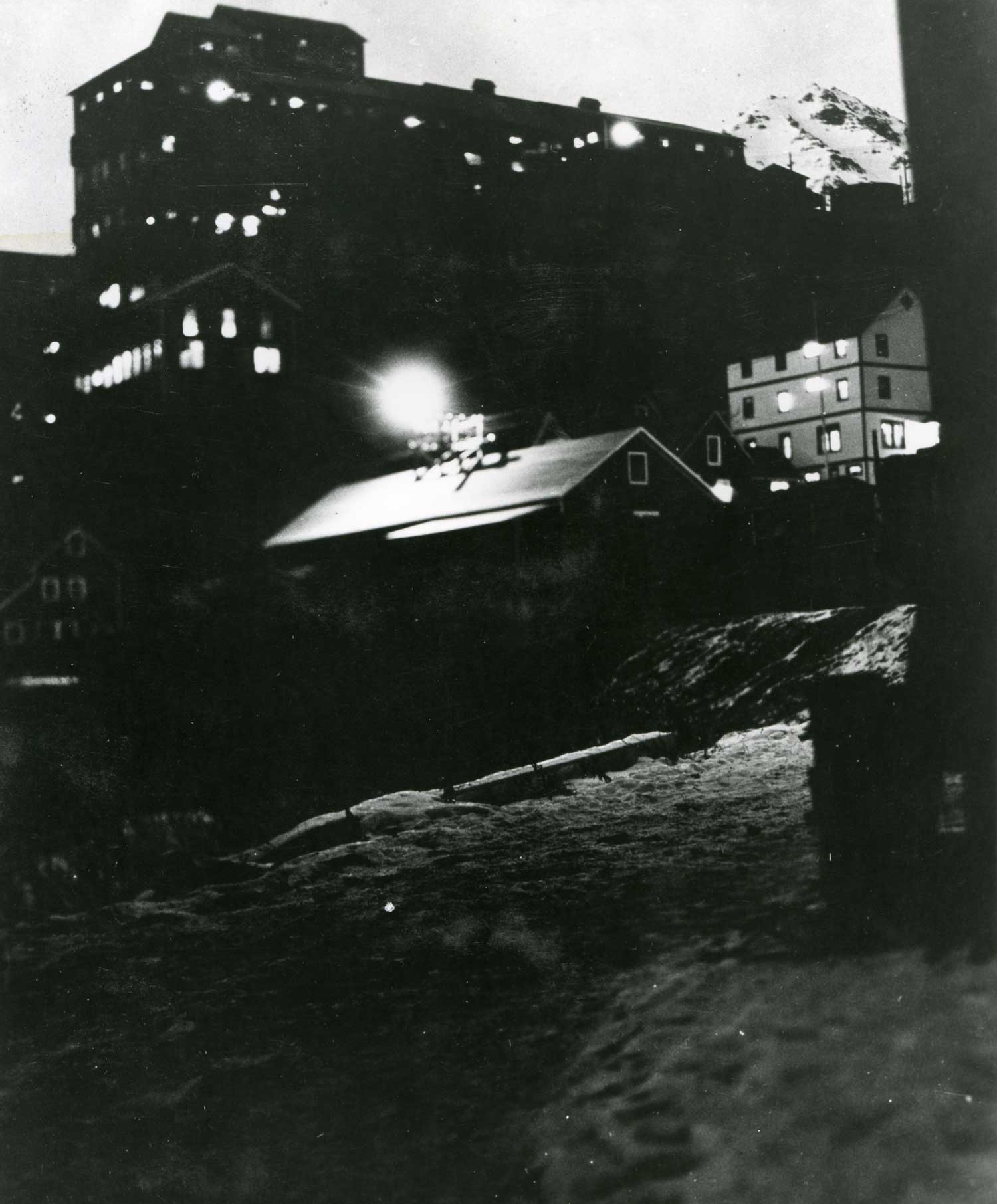
Kennecott at Night view 4

Another view of Kennecott at night.   --AMHA

         
Power was to originate from a dam about two miles down the creek at a narrow point in the canyon, but this plan was abandoned in favor of building a power house right in McCarthy where there was ready access to fuel brought in by the railroad.  By 1916 this power plant and a thirteen-mile string of power lines was in operation all the way up the McCarthy Creek canyon to the base and upper camps.  A narrow road was also extended from the town, crossing more than a dozen bridges, following the creek grade all the way to the lower camp.   This would enable year-around transporting of ore from the mine to town, where it could be loaded at Shushanna Junction, which was the railroad yard near McCarthy. 

           
Ore had been hauled only in the winter, sledded down the creek in limited quantities.   Although there was now a road and power,  there still remained the need for a mill, as it was only economical to ship very high-grade ore over the Copper River and Northwestern Railway and then the Alaska Steamship Lines to the Tacoma smelter.    By 1918, the mine was still only in limited production, as there had not been enough capital raised to build a mill or purchase special ore trucks to run the narrow road to McCarthy. Almost all of the development had been limited to the Marvelous vein, which lay in the rock face north of the upper camp in the upper elevations of the ridge which separates Mother Lode gulch from Marvelous gulch.  

         
Mother Lode was sitting on what appeared to be an ore vein of high potential, but the developers had so far failed to raise the necessary capital for the development required to exploit the situation.  Additionally, the company had not been successful in gaining favorable haulage rates from the CRNW Railway, which was wholly-owned by Kennecott Copper, the competition.
         
The Marvelous vein simply did not show enough potential to attract the needed investment capital.  What the company failed to realize was that the true “Mother Lode” lay directly beneath the upper camp, not quite 400 feet straight down.   Mother Lode Company ran several prospect tunnels searching for the elusive vein which would bring in the investment money before it was too late.   A main tunnel, at what was to become the Bonanza 800 level, headed to the northwest for a distance of several hundred feet.  They named it the Rhodes tunnel.  Directly above it, near the lower limit of Marvelous vein, the Pittsburg tunnel was started. 
         
In an attempt to find additional ore, a two-compartment vertical shaft was driven from a point well inside the Rhodes tunnel.  The Mother Lode vertical shaft, ultimately extended a vertical distance of 850 feet from the 600 level down to the 1450 level.  But most of that work was done by Kennecott.  The original tunnel was
not successful in driving the tunnel far enough down.  Ironically, had the ML
extended it another hundred feet in 1918, the old company would have discovered
the true Mother Lode and could have found financing independent of theKennecott
Corporation.  They were on the right track, but they ran out of time.    Kennecott would benefit enormously from this failure.

                   
Then came the severe winter storms. There had been no storms like these since the railroad arrived. One winter snow storm after another dumped load after load of snow over the entire upper Chitina and Nizina valleys.  The build-up was perilously high in late April when the melting actions of early spring finally set off those first avalanches.   Every aerial tram on the ridge was damaged by those slides, which increased in frequency and intensity until the upper towers at the Jumbo, Bonanza and Mother Lode mines, along with the power transmission towers, were knocked out of position or completely destroyed.  The two Kennecott upper camps were isolated for days, having no form of communication due to the lines being down and tram access gone as well.
         

But it was much worse at Mother Lode.  The upper camp was severely damaged and most of the tram towers were completely down.  The power line which followed the creek floor was heavily damaged as well.   The men who were at the upper camp had to stay in the tunnels while the avalanches were busy taking out everything in sight.  Remarkably, the main part of the upper camp was repairable, as it was above the area where most of the snow slides occurred.   But an already cash-strapped company now needed to make some sort of deal with Kennecott--something which had been avoided up until now.  There was no other choice if there was any hope of holding onto the already considerable investment at Mother Lode.   Although Kennecott had experienced considerable damage as well, the corporation had deep pockets and was prepared to handle emergencies of this kind.  It also had the investment capital on hand for the right opportunity to buy into the Mother Lode operation across the ridge.


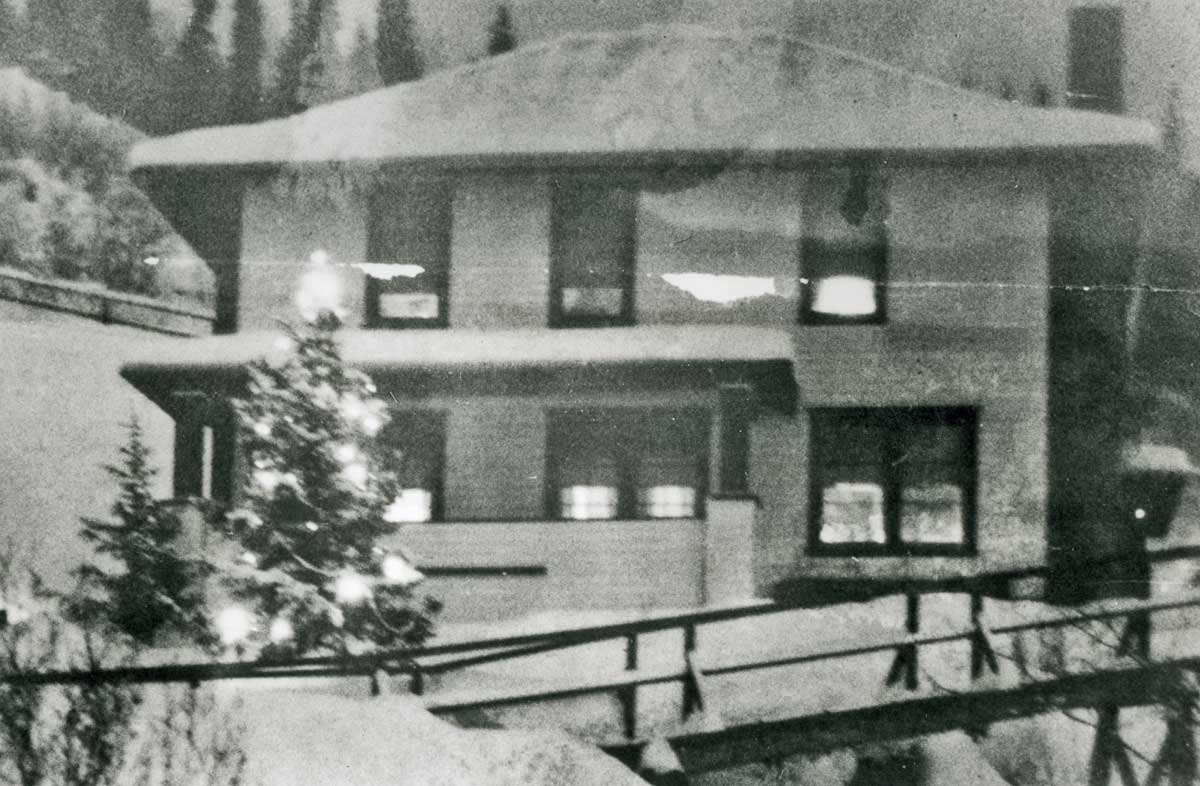
Stephen Birch house
Stephen Birch / Manger's House at Kennecott
 --Alaska Hst Soc, UAF Archives


He paused long enough to look up toward the dark hulk on the hill.  The Stephen Birch guest
house was now barely visible through the darkness and blowing snow.  Frank again
stood up and pressed is face against the cold glass.  It was really dark out
there. The lights in the Douglass house had gone out.  Only the dim porch lights
of the three entryways on the upper level of the hospital could be seen. 
He sat back down and took a sip of the tea. Ellen had sweetened it slightly with sugar and
lemon.  It was a pleasantly hot treat. He could feel coolness coming through the
glass and maybe even the walls.  Frank pulled the heavy robe more tightly around
himself and continued.

          
The early owners of Kennecott--the Alaska Syndicate, which mainly consisted of the Guggenheim family, J.P.Morgan, and just a few others--had the opportunity early on to pick up the Mother Lode claims, but failed to do so.   Ocha Potter,
representing Mother Lode, had tried to interest them before any development work began there, but the syndicate’s consulting engineer failed to make  a close
inspection of the site.  He was too old and did not want to make the long climb
up the hill.  He concluded that there would was no copper of any economic value
in the ML properties.

          That was the end of that for a while.  Mother Lode worked the Marvelous vein, which is the reason we are re-opening the camp over there.  We have decided to complete the work the old company left behind at Mother Lode in order to determine the likelihood of any adjacent large copper ore bodies.  But Marvelous, by itself, would not have been enough to interest Kennecott into picking up the entire site.

          However, by 1914, a new much younger consulting engineer took another look at the lay of the Bonanza vein and concluded that it probably extended well into the adjacent Mother Lode properties.   He projected the main vein at about 400 feet below the main adit at Mother Lode.  This information was kept confidential. But Kennecott was now ready to take advantage of any situation which would give it control over the adjacent properties.

          Then came the snow slides of 1918.  In very short order, the deal was made, and an all-new Mother Lode Coaltions Company was formed.

          As an interesting side note to all of this, when Kennecott picked up ML, it also obtained the power plant at McCarthy.  This continued to operate until power
could be run over to the ML workings through the 800 crosscut.   Then the plant
at McCarthy  was shut down.   It was still sitting completely  intact when the
Kennecott power plant burned down two years ago.  The availability of those
generators allowed us to resume operation that year much earlier than would
otherwise have been possible.  

          I have written enough about ML.  Thank you for tolerating my probably boring letter.  But then, as a fellow engineer, you can understand that.  I must admit that this time of year, with no family, it is good to have a few old friends with whom I can correspond. 

          Thanksgiving day is just around the corner here.  The company provides a special dinner to all of us on that day, but I’ll probably enjoy a dinner with the other engineers at the superintendent’s home.  I have never lost my fondness for turkey with all the trimmings.

          If I recall we were taught as schoolchildren that the Indians saved the first of us white people by providing badly needed food.  We have two Indians--they’re called ‘Natives’ up here--who are now working at Erie.  I was able to convince the
super to hire them for the first time back in 1924.  I had met one of them the
year before when I took the train in from Cordova in a very strange place called
Chitina.

          This Native, who is about my age, works with a cousin who calls himself
 Cap.The two of them have worked here three times.  They have added much to this camp. It has never been so interesting, even though the two of them think they are making themselves inconspicuous.  The team works so well together and is so daring in what they do that they far outshine almost everyone else.  They have proven to be about the finest workers I have ever encountered.  I understand that they will be assigned to the Marvelous Project.  With them there, I will probably never have a dull moment.  I might add that those two are literate and surprisingly articulate.

          Never let it be said that the “lowly Indian” cannot take care of himself.  These two are living examples of the best there is in Alaska.  They take extreme pride in their work, they work very hard, they think the problem through, and they won’t let anyone tell them “it can’t be done.”

          That happens to be a description of the ideal engineer and miner at Kennecott. That is what Kennecott is all about.

          I certainly miss those old days on the ranch in Wyoming, but that’s becoming a distant memory now.  Be sure to write back and let me know how things are progressing for you at Anaconda’s Butte Mine. 

          
With many
regards,

          
Your old friend
in the north country,

          
Frank Buckner

          
12 November,
1926
          
Kennecott,
Territory of Alaska


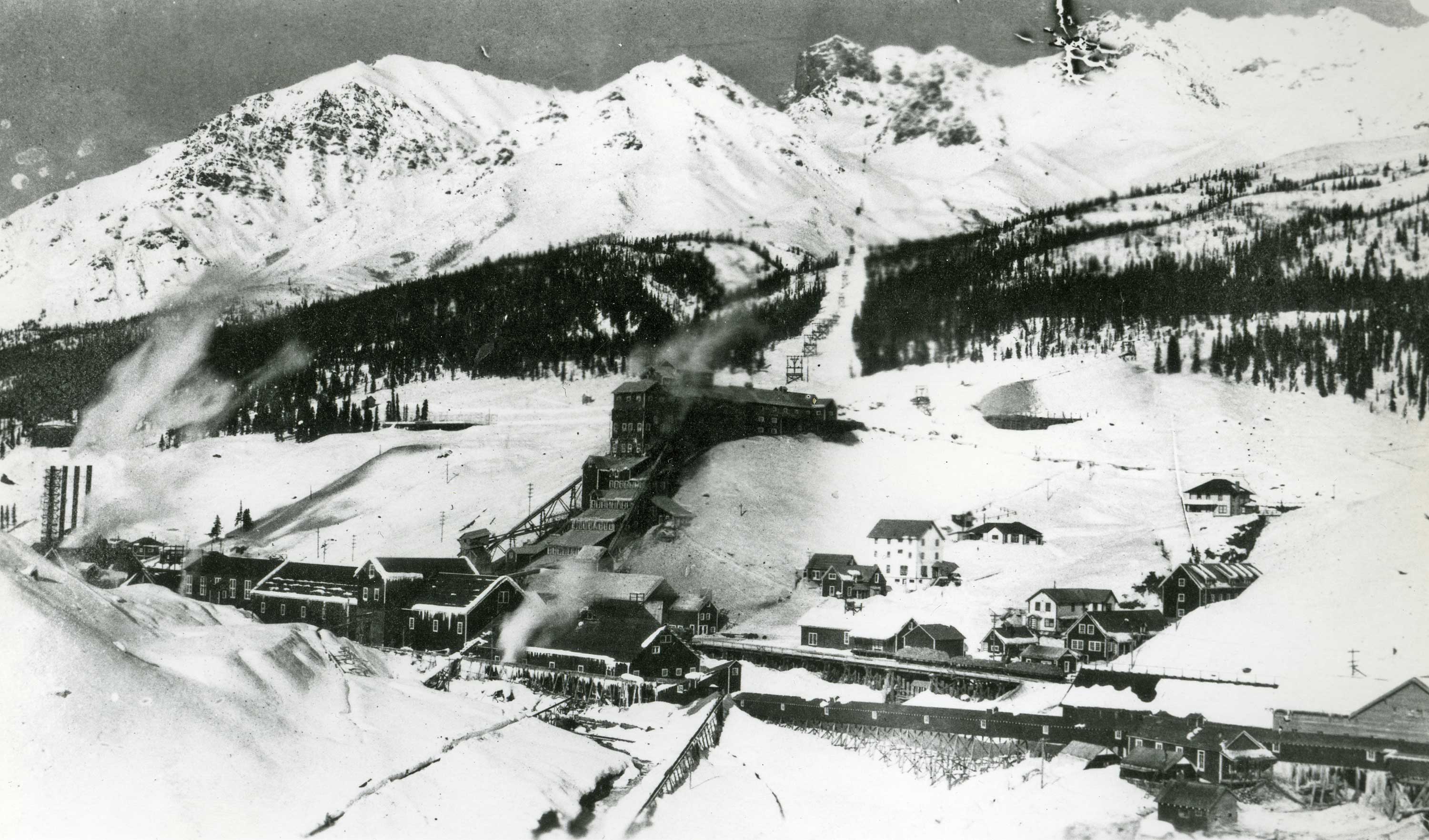
Kennecott in winter
Kennecott in the winter of 1918-19   
--Surgenor Collection, B72.32.3, AMHA


Continue with
Chapter 47, "Reopening the Mother Lode"